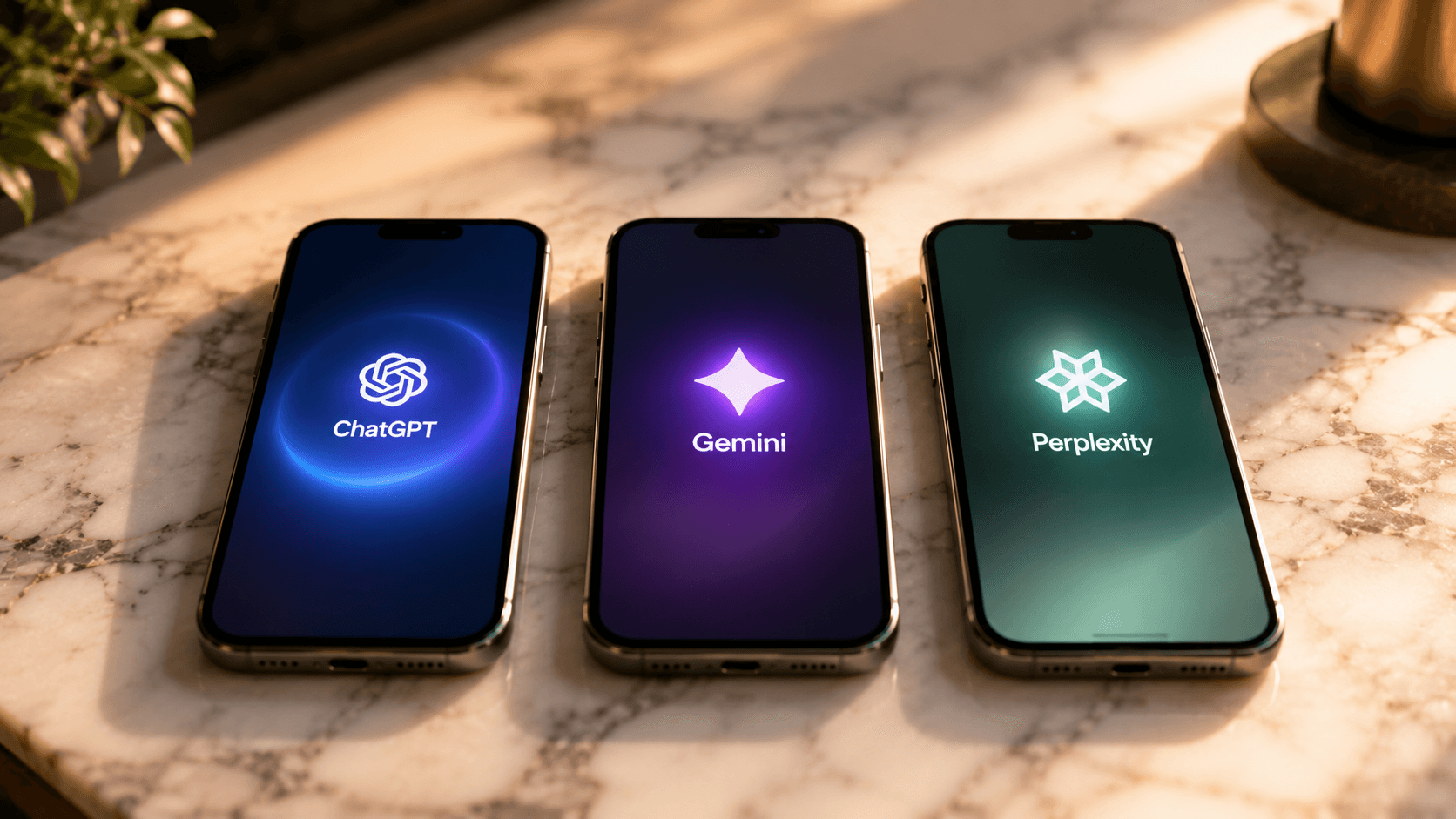
Why AI engines disagree
Each major AI engine operates from different data sources, different update schedules, and different weighting models. It is entirely normal — and actually expected — for your business to appear prominently in one engine and be absent from another. Understanding why helps you close the gaps.
The source differences
Google AI Overviews
AI Overviews draw primarily from:
- Google's own search index (crawled content)
- Google Business Profile data
- Google's structured data pipeline
- Google Maps and local knowledge graph
If you are visible in Google AI Overviews but not elsewhere, you have strong GBP and schema signals but may have weaker web content authority that other engines rely on.
ChatGPT
ChatGPT's recommendations draw from:
- Training data (web content from its training window)
- Browse results (live web content for queries that trigger Browse)
- Third-party data sources integrated into its knowledge base
If you appear in ChatGPT but not Google AI Overviews, you likely have strong web content authority (backlinks, domain age, publishing history) but may have weaker GBP or local schema signals.
Perplexity
Perplexity crawls the live web for each query and heavily weights:
- Recently published, source-citable content
- Named authorship and authority page structure
- External references from credible domains
If you appear in Perplexity but not other engines, your content quality is strong but your entity foundation (schema, GBP, NAP consistency) may lag.
The universal fix
Because different engines weight different signals, the most reliable path to cross-engine visibility is building all the foundational signals simultaneously:
- Organization/LocalBusiness schema (helps Google and Gemini)
- Complete GBP (helps Google AI Overviews specifically)
- Authority content with named authorship (helps Perplexity and ChatGPT)
- Review velocity across multiple platforms (helps all engines)
This approach produces parity across engines rather than optimizing for one at the expense of others.